miércoles, 18 de noviembre de 2015

jueves, 12 de noviembre de 2015
BRIEF HISTORY OF JAZZ
Jazz music is a mestizo
whose grandparents European music and African rhythm.
Their merger was in the
United States with the arrival of African slaves in the early seventeenth
century, cotton plantations, whose owners had a white European culture, with
its traditional classical and folk music.
The black slaves
eventually assimilate the Christian religion, especially Baptist and Methodist
and sang psalms in church, with European harmonies of white fused with
traditional African roots and was born GOSPEL religious side and the BLUES
outside the churches in plantations and street.

The Gospel, in full force with the magnificent
religious choirs, has been the cradle of many of the great female voices of
jazz.
The Blues, as the name suggests is sadness,
melancholy, and being "blues" is to feel sadness of a situation that
is not seen remedy, very typical of slaves and marginalized.
With a basic twelve-bar musical, uses so-called
"blue notes", an alteration of the third and seventh notes of the
musical scale, peculiar to this scale just as well call it "blues
scale". Especially the singers say the blues, but expressed sadness that
is "feeling" (Blues is a feeling).
Something like flamenco "duende".
In 1865, after the Civil War slaves they are
declared free.
At about that time, a musical style born in St.
Louis in 1870, gained in popularity. It was a dynamic dance style piano,
ragtime, whose scores were recorded in cardboard rolls for mechanical piano or
pianola was not jazz, but it was anything.
The Jazz comes from the pot where all these styles
are baked in the late nineteenth century in New Orleans.
In this city it was customary to accompany funerals
with band music. They did slow, sad and slow to go to the cemetery and cheerful
way to return, causing people out dancing behind them.
 |
 |
 |
In
the thirties jazz gets a great professional and shown great soloists who
improvise according to the appropriate harmonic scheme for each song. Now was
the "Swing", the Big Bands and mythical characters such as Duke
Ellintong, Count Basie, Goodman Benni yLouis Armstrong. The Jazz had also
played dignified and whites. It was dance music in the great halls or in small
slums US After the Second World War, appear on different styles of jazz. Of the
first styles, the "Be-bop" or simply "Bop" was invented by
the legendary Charlie Parker with Dizzy Gillespie. Being a more artistic and
intellectual style, full of racial and social protest, was not fit for the dance,
it was too fast and sometimes chaotic, but artistically was a revolution, which
made the batteries put everyone else.

Since 1947 successive changes again revolutionize
the Jazz, the "Bop" to "Cool" to "Hard Bop" and
"Free Jazz" occur. Artists as trumpeters Dizzy Gillespie and Miles
Davis, pianist Thelonius Monk, saxophonist Lester Young, Dexter Gordon, etc
..., all these styles evolved or invented.
With concerts throughout Europe and the personal
search without style defined the Fusion comes almost anything, especially with
the 60 Brazilian music (Bossa Nova), Cuba and America in general including
flamenco.
But he had also appeared on Rock, Pop, and
soloists, which moved masses of young people. The Jazz fell to a vast minority
who appreciate its essence: freedom; the music that arises at the time, yet the
value of the unique and ephemeral.
Today jazz is recovering thanks to the vast
minority, unconditional public. Even the primitive New Orleans, with the band
of Woody Allen and others.
There are now more jazz musicians than ever in its
history, but it is also true that fewer disks are sold in stores, and only one
has to ask. It is best to look on the internet and not the market the major
labels, but small independent labels or the musicians themselves. The discs are
worth us fans to remember and learn.
Anyway with discs musicians earn little, the
solution has been and will do concerts at festivals and clubs again, to make
the public dance, participate and have fun, as in the beginning, but very few
in Europe They understand and like dance music, it is, there is always
something primitive style swing, which invites you to move your feet.
More information www.apoloybaco.com history and
styles, advise visiting page for any consultation of Jazz, records,
biographies, literature, etc ... in that magnificent and web instructive find
everything about the Jazz and on our website will links to it for further
information. A must for any art lover.


martes, 10 de noviembre de 2015
rock and roll
On July 5, 1954 a truck driver age 19 would change the
course of music history to enter a small recording studio in Memphis to perform
three songs. Among those three issues recorded a certain Elvis Aaron Presley
was one of name That's All Right, which would mark the birth not only of a new
musical genre but a form of artistic, social and cultural expression, and a
style life: rock and roll.
Who would have thought that this music that fused the
country sound of white rhythm and blues and blacks, remain in force 50 years
after its inception, when they did not give more than five years of life-and
that young born in Tupelo, Mississippi on January 8, 1935, it would become
nothing less than the King of Rock, plus the most important and influential
figure in popular music in the twentieth century.
Throughout these 50 years, the rock has been left for
dead and risen from the ashes several times, but apparently the words spoken
one day by King became a prophecy: "I do not think (the rock and roll)
ever completely die because they will have to do something extraordinarily good
to take his place. "

Although "officially" the birth of rock and
roll is marked with the recording That's All Right, Elvis Presley, historically
both the music and the name arose shortly before. For many historians, the dawn
of the genre came with the song Rock Around the Clock by Bill Haley and His
Comets, which was recorded on April 12, 1954-three months before King made
history.

Meanwhile, the term "rock and roll" (slang
expression for blacks to refer to the sexual act) I started using radio host
Alan Freed in 1952 to define some songs that played on his show, like Rock the
joint, Bill Haley precisely, and also at festivals beginning to realize where
he hosted groups that played R & B.
However, considering the fact Elvis as the creator,
primary developer and King of Rock, has much to do with his personality, his
voice, his charisma and what he represented from the beginning not only for
music but for the popular culture of the time, breaking schemes and
transgressing moral and behavioral traditions.
But not everything in the 50s revolved around Elvis, as
the rock and roll was born other important and transcendent figures would
behoove those who write very important chapters on the genesis of his story.

rock history
Within that list, it could be very long, include basic
characters like Chuck Berry, Little Richard, Bo Diddley, Buddy Holly, Jerry Lee
Lewis, Fats Domino, OrbisonEdie Roy Cochran and The Everly Brothers, among
others.
The rise of this first generation of rock and roll came
into 1956-57 and Elvis would be the same that would mark its decline when in
1958 he joined the United States Army, where he remained until 1960. While on
his return popularity continued through the skies, his music stopped having the
burden of rebellion and freshness with which young people were identified years
earlier. The rock was ready to undergo its first metamorphosis.
I'll tell you how it started (The Rock)
After the decline of the first idols of rock and roll in
the late 50s, the baton was taken by the artists of color, who in the early 60s
began to dance everybody with Motown, a celebration of R & B, soul and
funk.
That wave of artists are remembered, among many others to
The Supremes, The Marvelletes, The Shirelles, Marvin Gaye, Stevie Wonder and
the godfather of funk, James Brown, who gave a new meaning to the pop music
with freshness and joy .
But the decade would be enough left to spend four years
for a new movement, with such large dimensions and implications as the birth of
the genre, be presented. With the "British invasion" of British music
he was present and, as they would from then on, show that from there would
always step forward to what was created in the United States.
Then the whole world vibrated to the rhythm of The Kinks,
The Animals, The Who, The Zombies, The Shadows, The Hollies and, of course,
with The Beatles and The Rolling Stones, the two most important and influential
bands in rock history .

Meanwhile, in the US response would come a few years
later, when last half of the decade the acid rock and psychedelia would take
over the scene and bring a new rock movement, perhaps the most important and of
great social and cultural impact .
After Bob Dylan decided to leave some folk and electrify
his music, a great generation of American bands began to create a movement that
years later, in 1969, would lead to the "Woodstock Nation," a
three-day festival duration which drew nearly half a million people.
Of that generation include Jimi Hendrix (considered as
the best rock guitarist of all time), Janis Joplin, The Doors, The Jefferson
Airplane, The greateful Dead, The Byrds, Country Joe & The Fish, and a
number of groups coming mainly West Coast of the United States.
With the Woodstock Festival, held in Woodstock, New York
in 1969, the generation of "peace and love" had its utopian moment,
its peak, but also marked the beginning of the end, which occurred months later
concert Free The Rolling Stones that offered in Altamount, California, where a
young black man was cruelly gunned down and killed by a gang of Hell's Angels,
paradoxically hired by the Stones to provide security. The dream was over.

"The dream is over." With this phrase included
in God song, John Lennon, begins the decade of the 70s in the rock. After
experienced in the previous decade feast, the new well and did not look
anything from the very dawn examples of this were given.

Jimi Hendrix and Janis Joplin, two symbols of the
generation of 60, killed in 1970 because of an overdose. In that same year,
Paul McCartney officially announced the separation of The Beatles, the group,
as Lennon once said, was almost as popular as Jesus Christ. A year later, in
1971, Jim Morrison, lead singer of The Doors and a major sex symbols and visual
icons of rock history, also dies of overdose.
With these bad omens, the first half of the decade the
rock undergoes its mass and establishing visual paraphernalia on large scales at
concerts. Led Zeppelin will reign over the decade, and they will come after The
Rolling Stones and Pink Floyd, with really impressive performances.

The heavy metal, hard rock and glam rock take over the
taste of the masses over the first half of the decade, so groups like Deep
Purple, Black Sabbath, Queen, Kiss, Bad Company live their moments of glory.

However, all that mass, glamor, visual paraphernalia and,
in the case of progressive rock, virtuosity, alienates his street roots rock
and rebellion, so that young people no longer find an ID and a flag on it. It
is then that in the New York suburbs punk arises rock derived which incorporates
the rebellion, along with a dose of anarchism, hedonism and politicization,
making it one of the significant moments in the history of the genre.
The punk was born in New York engendered by now legendary
Ramones, but the English The Sex Pistols lead him to the end. Other notable
significance bands are The Clash, The Damn, Generation X, The Misfits and Black
Flag. So while the rock was in a deep and disco reigned over the charts, the
last great movement of the genre was present.
Like its predecessor, the 80s begins with deaths and
separations. John Lennon, leader and founder of the Beatles, political and
social activist is murdered outside his New York apartment on December 8, 1980.
The whole world cries, the song Imagine sounds around the globe and rock and
Western popular culture are mourning.

John Bonham, Led Zeppelin drummer, dies of an alcoholic
congestion 25, 1980; months later, Jimmy Page announced the separation of the
group. Bob Marley, the highest figure in reggae music, died on May 11, 1981
cancer victim. The Eagles, one of the great country-rock groups of the 70
announced their separation in May 1982, they will meet only say "until
hell freezes over" (which "happen" in the spring of 1994, when
They came together again).
The 80s were characterized by the wide diversity of music
styles, proposals, forms and aesthetics, thanks to the birth of various
subgenres of rock (new wave, post-punk, techno, dark, electronic, rap,
breakdance, dark metal , new romantic ...), which were incorporated into the
scene throughout the decade, some with massive features, in terms of their
exposure, others rather underground or alternative.
In the first half of the decade it highlights a British
trio born punk but had evolved and changed their sound: The Police, whose mix
of rock, reggae and jazz became the best band in the world, until they
separated in 1985, just when experiencing their highest point, artistically and
commercially speaking.
I'll tell you how it started (The Rock)
Before the disintegration of the Police who take the
baton are the Irish band U2, which for the late 80s and had become the biggest
rock band in the world, to the great levels as The Beatles, The Rolling Stones,
Led Zeppelin, among others.
Talking Heads, Simple Minds, The Pretenders, XTC, Men an
Work, Madness, The Cars, The Cure, The Smiths, Bauhaus, Depeche Mode, Tears For
Fears, OMD, Pet Shop Boys, Ultravox, Duran Duran are just some of the many
stars of the decade.
music
A couple of years before they became extinct 80, a band
of Los Angeles come to give a fresh injection of vitality to Rock Guns N
'Roses, whose hard rock, glam and his scruffy appearance between the
personality of its singer Axl Rose and his debut album, Apettite for
destruction, conquered the world.
If diversification is experienced in the 80s, the 90s
were the decade of technology in music in general. The implementation of new
recording techniques and computer use were made basic elements in music
production.
However, the 90 began with what can be considered as the
last great movement in the rock: grunge, which in turn throw the last martyr of
the genre: Kurt Cobain.

In a situation somewhat similar to the birth of punk in
the late 70s, at the end of the 80 it began to take shape in Seattle movement
musically conjuntaba the power and ferocity of punk and heavy metal, and
ideologically conveyed a message of indifference , introspection and isolation,
to what was happening in American society and the world in general.
This movement mainly highlighted two bands: Nirvana, and
Pearl Jam, but it would mark the first that an entire generation with his song
Smells like teen spirit and your hard Nevermind, but also by its singer, Kurt
Cobain, who would become, like they did at the time Morrison, Hendrix, Janis,
the hero and martyr of that time to kill himself the April 5, 1994.
In response, the British revived this wave of Britpop of
the 60s, and this time championed by groups like Oasis, Blur, Radiohead,
Supergrass, Pulp, The Verve, a mid gave new meaning and direction to rock .
Of these bands, Oasis and Blur were what led moving but
that Radiohead would be to late to stop one of the most celebrated artistic
testimonies in rock history with his album OK computer, where they got an
admirable balance between the use of technology with the rock in its basic
form.
The decade closed with the presence of groups called rap
metal as Korn, Limp Bizkit, Deftones, Stain, POD, which despite having a lot of
followers, mainly in his native United States, could not compete with the teen
pop Britney Spears, Backstreet Boys, Christina Aguilera, 'N Sync and the like
which are posesionaría for sale listings.
The arrival of the new millennium would bring another
resurgence of rock, with groups like The Strokes, The White Stripes, Yeah Yeah
Yeahs, The Libertines, The Vines, The Hives, who retaking musical and aesthetic
elements of the late 70s and early 80 will return the simplicity, harmony and
attitude that this genre had lost since he was born was destined to stay
forever, and now at 50 years of age shows that still a rebel and in their best
years.


SOUL MUSIC
Soul is a popular music genre that originated in the United States in the 1950s and early 1960s. It combines elements of African-American gospel music, rhythm and blues and jazz. Soul music became popular for dancing and listening in the United States; where record labels such as Motown, Atlantic and Stax were influential in the civil rights era. Soul also became popular around the world, directly influencing rock music and the music of Africa.[1]
According to the Rock and Roll Hall of Fame, soul is "music that arose out of the black experience in America through the transmutation of gospel and rhythm & blues into a form of funky, secular testifying".[2] Catchy rhythms, stressed by handclaps and extemporaneous body moves, are an important feature of soul music. Other characteristics are a call and response between the soloist and the chorus, and an especially tense vocal sound. The style also occasionally uses improvisational additions, twirls and auxiliary sounds.[3]
Soul music dominated the U.S. R&B chart in the 1960s, and many recordings crossed over into the pop charts in the U.S., Britain and elsewhere. By 1968, the soul music genre had begun to splinter. Some soul artists developed funk music, while other singers developed slicker, more sophisticated, and in some cases more politically conscious varieties.[4] By the early 1970s, soul music had been influenced by psychedelic rock and other genres. The United States saw the development of neo soul around 1994. There are also several other subgenres and offshoots of soul music.
The key subgenres of soul include the Detroit (Motown) style, a rhythmic music influenced by gospel; deep soul and southern soul, a driving, energetic soul style combining R&B with southern gospel music sounds; Memphis soul, a shimmering, sultry style; New Orleans soul, which came out of the rhythm and blues style; Chicago soul, a light gospel-influenced sound; Philadelphia soul, a lushorchestral sound with doo-wop-inspired vocals; Psychedelic soul, a blend of psychedelic rock and soul music; as well as categories such as Blue-eyed soul, music performed by white artists; British soul; and Northern soul, rare soul music played by DJs atnightclubs in Northern England.
Electonic music
It is known as electronic music all that music created by synthesizers, drum machines, samplers and computers. Likewise, you may be considered as the music created by a computer and this is made possible by a software (program) you can scan, manipulate and process the sounds, supported by synthesizers. Rock music, when synthesizers arise, is very involved with these devices and of course electronic music to create songs with better quality; some rock bands that came to use the first synthesizers were The Beatles, The Rolling Stons, The United States of America, Pink Floyd, The Silver Apples, U2, among others.
To begin to understand better electronic music (known in Europe as dance music) will try to give a brief overview of their emergence and evolution, from the first use of sampling to the incorporation of new machines and robots, while the electronic covers countless subgenres, try to have some history.
Composers and Inventors
The movement "The Art of Noise" of the century was what really gave birth to what is today called rave culture through compositions inspired by the mechanical and electrical swing of the city. Making homemade boxes, which incorporated the sounds of sirens, horns and whistles, these futuristic techno were already doing without the addition of beats. To advance the century, composers such as Pierre Schaeffer and Pierre Henry began to cut and paste tapes (an early example of sampling) to create pieces with pieces of sounds from different sources. Before the clubs DJs will use plates - trays (turntables) variable speed, Luigi Russolo and the American composer John Cage incorporated as much as 42 dishes in one piece. These have been sampled and remixed by contemporary artists such as Irresistible Force, DJ Spooky, Fatboy Slim and Coldcut, among others.
Artists
Pierre David Guetta (Paris, November 7, 1967), better known as David Guetta, is a disc jockey and French electronic music record producer, specializing in house music and dance.
It began as such in several clubs during the 80s and 90s, before he founded Gum Productions and launch what would be his first album, Just a Little More Love in 2002. Years later come Guetta Blaster in 2004, Pop Life in 2007, One successful in love (2009), which includes the singles "When Love Takes Over" -along with Kelly Rowland earning him to win a Grammy and win success worldwide, selling more than 5.5 million copies worldwide.
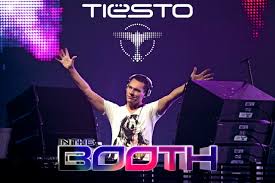
Tijs Michiel Verwest (b. January 17, 1969, in Breda, Netherlands) 3 is a Dutch DJ and producer. Although he has used many aliases in the past, he is best known for his work as DJ Tiësto Tiësto or simply, a nickname that comes from his childhood nickname.
He began playing music since 1984, and in 1994 began releasing recording material under the pseudonyms of Da Joker and DJ Limited. He made the Forbidden Paradise series as DJ Tiësto; in 1997 he founded the label Black Hole Recordings with Arny Bink, under which Muzik Magik and In Search Of Sunrise series was released on CD. In 1999 and 2000 he collaborated with Ferry Corsten to create Gouryella Sparkles and also created the track which made several remixes. In 2000, he released the compilation album mixed Summerbreeze and "Silence" for Delerium, Sarah McLachlan version, exposed him to more mainstream audiences. In 2001 he released his first solo album In My Memory which gave him several major thrusts his career.

It is known as electronic music all that music created by synthesizers, drum machines, samplers and computers. Likewise, you may be considered as the music created by a computer and this is made possible by a software (program) you can scan, manipulate and process the sounds, supported by synthesizers. Rock music, when synthesizers arise, is very involved with these devices and of course electronic music to create songs with better quality; some rock bands that came to use the first synthesizers were The Beatles, The Rolling Stons, The United States of America, Pink Floyd, The Silver Apples, U2, among others.
To begin to understand better electronic music (known in Europe as dance music) will try to give a brief overview of their emergence and evolution, from the first use of sampling to the incorporation of new machines and robots, while the electronic covers countless subgenres, try to have some history.
Composers and Inventors
The movement "The Art of Noise" of the century was what really gave birth to what is today called rave culture through compositions inspired by the mechanical and electrical swing of the city. Making homemade boxes, which incorporated the sounds of sirens, horns and whistles, these futuristic techno were already doing without the addition of beats. To advance the century, composers such as Pierre Schaeffer and Pierre Henry began to cut and paste tapes (an early example of sampling) to create pieces with pieces of sounds from different sources. Before the clubs DJs will use plates - trays (turntables) variable speed, Luigi Russolo and the American composer John Cage incorporated as much as 42 dishes in one piece. These have been sampled and remixed by contemporary artists such as Irresistible Force, DJ Spooky, Fatboy Slim and Coldcut, among others.
The Radar and the Battle of Britain.
Since the early 1980s, both Britain and France remained an important disarmament that had begun the previous decade. Germany, contravening the provisions of the Treaty of Versailles began with the advent of the Nazi regime, a broad program of rearmament. In a few years a powerful weapon for its time was developed, the aerial bombardment. Or each country developed a body of air bombers, or carried out a general disarmament. Britain opted for the latter, but not Germany.In the 1930s the concept was popular Ray of death could cause physical, mental disability and even death. During that decade there were quite a number of people who claimed to have invented and built devices that produce different types of rays. Analysis showed that there was always a trick.A small acoustic system, which would receive a signal when the sounds produced by aircraft, it was not functional as it does not distinguish between the noise produced by the attacker and other sounds, cars, pets built.HE Wimperis, head of Scientific and Industrial Research, Ministry, called Dr. Robert Watson Watt, physicist and director of the Radio Research Laboratory and asked about the prospect of developing a ray of death. Watson Watt returned to his laboratory and proposed the following Dr. Arnold Wilkins, physical and his assistant: calculate the amount of RF power required to raise the temperature of 4 liters of 35.5º C to 41 ° C at a distance of 5 km and a height of 1 kilometer. His calculation was that generate enormous power needed was clear that it was not feasible lightning death through the radio.Wilkins told Watson that engineers of the Post Office had noticed disturbances in receiving very high frequencies when a plane flying in the vicinity of their receivers. This observation (January 1935) led to the beginning of a series of events that culminated in the invention of radar.Experimental verification, which was entrusted to Wilkins, who with his rudimentary equipment could detect and followed the path that had started an aircraft.The first issues that was resolved the visual presentation of the information received, they used a cathode ray tube.They were made many modifications so that it could detect both the distance at which a plane was, but its height. Most of the system was completed in September 1938, when the Munich crisis occurred.They settled in the British aircraft electronic devices to receive the emitted wave sent from earth to turn a special sign that identified them as friend In August 1939, three weeks before the start of World War II, Britain had a system for detecting aircraft. With the aid of radar, the English could detect the output of the Germans from their bases in conquered countries, such as France and Belgium aircraft.
Since the early 1980s, both Britain and France remained an important disarmament that had begun the previous decade. Germany, contravening the provisions of the Treaty of Versailles began with the advent of the Nazi regime, a broad program of rearmament. In a few years a powerful weapon for its time was developed, the aerial bombardment. Or each country developed a body of air bombers, or carried out a general disarmament. Britain opted for the latter, but not Germany.In the 1930s the concept was popular Ray of death could cause physical, mental disability and even death. During that decade there were quite a number of people who claimed to have invented and built devices that produce different types of rays. Analysis showed that there was always a trick.A small acoustic system, which would receive a signal when the sounds produced by aircraft, it was not functional as it does not distinguish between the noise produced by the attacker and other sounds, cars, pets built.HE Wimperis, head of Scientific and Industrial Research, Ministry, called Dr. Robert Watson Watt, physicist and director of the Radio Research Laboratory and asked about the prospect of developing a ray of death. Watson Watt returned to his laboratory and proposed the following Dr. Arnold Wilkins, physical and his assistant: calculate the amount of RF power required to raise the temperature of 4 liters of 35.5º C to 41 ° C at a distance of 5 km and a height of 1 kilometer. His calculation was that generate enormous power needed was clear that it was not feasible lightning death through the radio.Wilkins told Watson that engineers of the Post Office had noticed disturbances in receiving very high frequencies when a plane flying in the vicinity of their receivers. This observation (January 1935) led to the beginning of a series of events that culminated in the invention of radar.Experimental verification, which was entrusted to Wilkins, who with his rudimentary equipment could detect and followed the path that had started an aircraft.The first issues that was resolved the visual presentation of the information received, they used a cathode ray tube.They were made many modifications so that it could detect both the distance at which a plane was, but its height. Most of the system was completed in September 1938, when the Munich crisis occurred.They settled in the British aircraft electronic devices to receive the emitted wave sent from earth to turn a special sign that identified them as friend In August 1939, three weeks before the start of World War II, Britain had a system for detecting aircraft. With the aid of radar, the English could detect the output of the Germans from their bases in conquered countries, such as France and Belgium aircraft.
Artists
Pierre David Guetta (Paris, November 7, 1967), better known as David Guetta, is a disc jockey and French electronic music record producer, specializing in house music and dance.
It began as such in several clubs during the 80s and 90s, before he founded Gum Productions and launch what would be his first album, Just a Little More Love in 2002. Years later come Guetta Blaster in 2004, Pop Life in 2007, One successful in love (2009), which includes the singles "When Love Takes Over" -along with Kelly Rowland earning him to win a Grammy and win success worldwide, selling more than 5.5 million copies worldwide.
Tijs Michiel Verwest (b. January 17, 1969, in Breda, Netherlands) 3 is a Dutch DJ and producer. Although he has used many aliases in the past, he is best known for his work as DJ Tiësto Tiësto or simply, a nickname that comes from his childhood nickname.
He began playing music since 1984, and in 1994 began releasing recording material under the pseudonyms of Da Joker and DJ Limited. He made the Forbidden Paradise series as DJ Tiësto; in 1997 he founded the label Black Hole Recordings with Arny Bink, under which Muzik Magik and In Search Of Sunrise series was released on CD. In 1999 and 2000 he collaborated with Ferry Corsten to create Gouryella Sparkles and also created the track which made several remixes. In 2000, he released the compilation album mixed Summerbreeze and "Silence" for Delerium, Sarah McLachlan version, exposed him to more mainstream audiences. In 2001 he released his first solo album In My Memory which gave him several major thrusts his career.
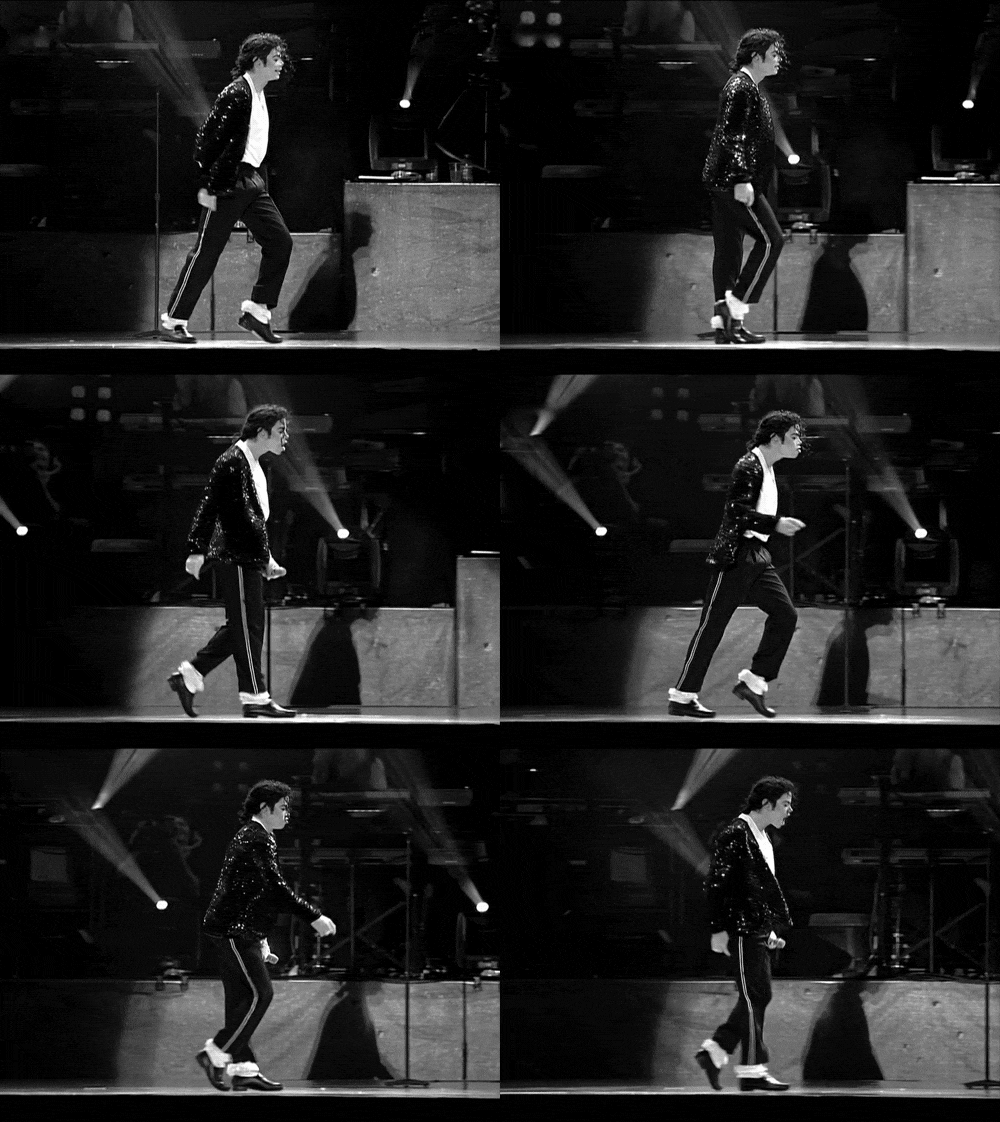
Michael Jackson - History (Official Video)
(a term that derives from "popular") is a genre of popular music that originated in its modern form in the Western world during the 1950s and 1960s, deriving from rock and roll. The terms "popular music" and "pop music" are often used interchangeably, although the former describes all music that is popular (and can include any style). Pop music is eclectic, and often borrows elements from other styles such as urban, dance, rock, Latin, and country; nonetheless, there are core elements that define pop music. Identifying factors include generally short to medium-length songs written in a basic format (often the verse-chorus structure) as well as the common employment of repeated choruses, melodic tunes, and hooks. Definitions[edit] David Hatch and Stephen Millward define pop music as "a body of music which is distinguishable from popular, jazz, and folk musics".

According to Pete Seeger, pop music is "professional music which draws upon both folk music and fine arts music".[2] Although pop music is seen as just the singles charts, it is not the sum of all chart music. The music charts contain songs from a variety of sources, including classical, jazz, rock, and novelty songs. Pop music, as a genre, is seen as existing and developing separately.
Thus "pop music" may be used to describe a distinct genre, aimed at a youth market, often characterized as a softer alternative to rock and roll. v Etymology[edit] The Oxford Dictionary of Music states that the term "pop" refers to music performed by such artists as the Rolling Stones (pictured here in a 2006 performance) The term "pop song" was first recorded as being used in 1926, in the sense of a piece of music "having popular appeal".Hatch and Millward indicate that many events in the history of recording in the 1920s can be seen as the birth of the modern pop music industry, including in country, blues and hillbilly music. According to the website of The New Grove Dictionary of Music and Musicians, called Grove Music Online, the term "pop music" "originated in Britain in the mid-1950s as a description for rock and roll and the new youth music styles that it influenced ...". The Oxford Dictionary of Music states that while pop's "earlier meaning meant concerts appealing to a wide audience ... since the late 1950s, however, pop has had the special meaning of non-classical mus[ic], usually in the form of songs, performed by such artists as the Beatles, the Rolling Stones, ABBA, etc". Grove Music Online also states that "... in the early 1960s [the term] 'pop music' competed terminologically with Beat music [in England], while in the USA its coverage overlapped (as it still does) with that of 'rock and roll'".
From about 1967 the term was increasingly used in opposition to the term rock music, a division that gave generic significance to both terms.Whereas rock aspired to authenticity and an expansion of the possibilities of popular music, pop was more commercial, ephemeral and accessible. According to Simon Frith pop music is produced "as a matter of enterprise not art", is "designed to appeal to everyone" and "doesn't come from any particular place or mark off any particular taste". It is "not driven by any significant ambition except profit and commercial reward ... and, in musical terms, it is essentially conservative". It is, "provided from on high (by record companies, radio programmers and concert promoters) rather than being made from below ... Pop is not a do-it-yourself music but is professionally produced and packaged". Influences and development[edit] The story of pop music is largely the story of the intertwining pop culture of the United States and the United Kingdom in the postwar era. “” — Bob Stanley Throughout its development, pop music has absorbed influences from most other genres of popular music.

Early pop music drew on the sentimental ballad for its form, gained its use of vocal harmonies from gospel and soul music, instrumentation from jazz, country, and rock music, orchestration from classical music, tempo from dance music, backing from electronic music, rhythmic elements from hip-hop music, and has recently appropriated spoken passages from rap. It has also made use of technological innovation. In the 1940s improved microphone design allowed a more intimate singing style and ten or twenty years later inexpensive and more durable 45 r.p.m. records for singles "revolutionized the manner in which pop has been disseminated" and helped to move pop music to 'a record/radio/film star system'.Another technological change was the widespread availability of television in the 1950s; with televised performances, "pop stars had to have a visual presence".In the 1960s, the introduction of inexpensive, portable transistor radios meant that teenagers could listen to music outside of the home. Multi-track recording (from the 1960s); and digital sampling (from the 1980s) have also been utilized as methods for the creation and elaboration of pop music. By the early 1980s, the promotion of pop music had been greatly affected by the rise of Music Television channels like MTV, which "favoured those artists such as Michael Jackson and Madonna who had a strong visual appeal".
According to several sources, MTV helped give rise to pop stars such as Michael Jackson and Madonna; and Jackson and Madonna helped make MTV. Pop music has been dominated by the American and (from the mid-1960s) British music industries, whose influence has made pop music something of an international monoculture, but most regions and countries have their own form of pop music, sometimes producing local versions of wider trends, and lending them local characteristics. Some of these trends (for example Europop) have had a significant impact of the development of the genre. According to Grove Music Online, "Western-derived pop styles, whether coexisting with or marginalizing distinctively local genres, have spread throughout the world and have come to constitute stylistic common denominators in global commercial music cultures". Some non-Western countries, such as Japan, have developed a thriving pop music industry, most of which is devoted to Western-style pop, has for several years produced a greater quantity of music of everywhere except the USA.The spread of Western-style pop music has been interpreted variously as representing processes of Americanization, homogenization, modernization, creative appropriation, cultural imperialism, and/or a more general process of globalization.HIStory - Past, Present And Future - Book I was Michael Jacksons 9th studio album and first published in June 1995. It also included the first official called greatest hits compilation on Epic records. It sold over 40 million times worldwide and was therefore commercially less successful than his predecessor 'Dangerous'.
Only one number 1 hit in the United States (You Are Not Alone) makes the statistics look pretty bad. But as so often before, Michael at this time was less measured by his music but by the stories who went through the press. In addition, the songs were timeless and did not fit right into the current chart music. Years later songs like 'They Don't Care About Us' were properly recognized and regarded as masterpieces.
HIStory showed for the first time also "another face" of Michael Jackson. Lots of hate and anger are noticeable in some songs. What is also reflected in the vocabulary of some songs. The cause is naturally centered primarily on the allegations levied against him in 1993.
HIStory - Past, Present And Future - Book I was the second last studio album in whose publication Michael was involved.


Suscribirse a:
Comentarios (Atom)