SOUL MUSIC
Soul is a popular music genre that originated in the United States in the 1950s and early 1960s. It combines elements of African-American gospel music, rhythm and blues and jazz. Soul music became popular for dancing and listening in the United States; where record labels such as Motown, Atlantic and Stax were influential in the civil rights era. Soul also became popular around the world, directly influencing rock music and the music of Africa.[1]
According to the Rock and Roll Hall of Fame, soul is "music that arose out of the black experience in America through the transmutation of gospel and rhythm & blues into a form of funky, secular testifying".[2] Catchy rhythms, stressed by handclaps and extemporaneous body moves, are an important feature of soul music. Other characteristics are a call and response between the soloist and the chorus, and an especially tense vocal sound. The style also occasionally uses improvisational additions, twirls and auxiliary sounds.[3]
Soul music dominated the U.S. R&B chart in the 1960s, and many recordings crossed over into the pop charts in the U.S., Britain and elsewhere. By 1968, the soul music genre had begun to splinter. Some soul artists developed funk music, while other singers developed slicker, more sophisticated, and in some cases more politically conscious varieties.[4] By the early 1970s, soul music had been influenced by psychedelic rock and other genres. The United States saw the development of neo soul around 1994. There are also several other subgenres and offshoots of soul music.
The key subgenres of soul include the Detroit (Motown) style, a rhythmic music influenced by gospel; deep soul and southern soul, a driving, energetic soul style combining R&B with southern gospel music sounds; Memphis soul, a shimmering, sultry style; New Orleans soul, which came out of the rhythm and blues style; Chicago soul, a light gospel-influenced sound; Philadelphia soul, a lushorchestral sound with doo-wop-inspired vocals; Psychedelic soul, a blend of psychedelic rock and soul music; as well as categories such as Blue-eyed soul, music performed by white artists; British soul; and Northern soul, rare soul music played by DJs atnightclubs in Northern England.
History of Soul Music
This page looks at the vocabulary of Soul Music through its history, people and songs. For other genres see Popular Music Genres.
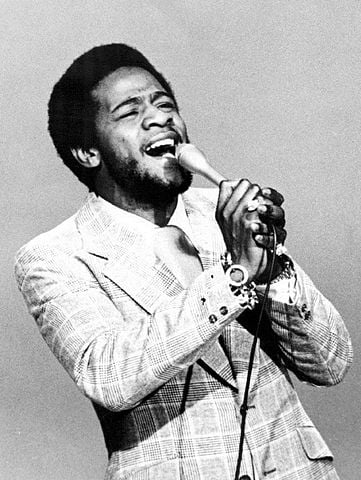 Soul music is a genre of African American popular music that led to many later genres, from funk and dance music to hip hop and contemporary R&B. It developed in the USA in the late 1950s from African American church music called "gospel music". After slavery ended in 1865, African Americans weren't welcome in the churches of white Americans, so they built their own churches and sang Christian songs with African-American vocal styles and rhythms. They sang joyful, up-tempo gospel songs while clapping and moving to the beat, and they sang slower gospel songs that expressed deep feelings like yearning for God's love. These different styles led to the two main styles of soul music.
Image right: Al Green, one of soul music’s greatest singers. Photo: Mike Douglas Show / Public Domain
Early Soul Music
The first soul songs were created when gospel songs were changed into secular songs by rewriting the lyrics. Joyful, up-tempo gospel songs became up-tempo soul songs, while slower gospel songs became romantic love songs. An example of the up-tempo style is R&B artist Ray Charles' 1954 song I've Got a Woman (Way Across Town), a secular version of the old gospel song I've Got a Savior (Way Across Jordan). Another example is Ray's first crossover hitWhat'd I Say in which he uses a gospel-music call and responseto exchange sexy "oohs" and "aahs" with the Raelettes, his femalebacking singers. An example of the slower style is former gospel singer James Brown's 1956 song Please, Please, Please in which he changed a gospel song about yearning for God's love into a song about yearning for a girl's love.
Another gospel singer who changed gospel songs into secular songs was Sam Cooke. Sam had joined the gospel group Soul Stirrers as a teenager, but he was forced to leave the group in 1956 after recording the song Lovable, a secular version of the group's gospel song Wonderful. His beautiful yet powerful voice can be heard on his first 1957 crossover hit You Send Me. The song was so popular that it replaced Elvis Presley's Jailhouse Rock at the top of the pop-music charts. It was the first of nearly thirty crossover hits he recorded before writing his last and greatest songA Change is Gonna Come in 1964. The song expressed his yearning for an end to racism, but before it was released Sam was murdered in Los Angeles. Even though his life was cut short, his success opened the way for many other African American soul singers.
Video: Sam Cooke singing about racism in America in the last song he wrote, 1964’s A Change Is Gonna Come
Northern Soul: Detroit and Chicago
The most popular style of soul music in the early-60s was Motown's pop soul. In 1959, businessman Berry Gordy started Motown Records in the northern city of Detroit, Michigan. His songwriters and artists created the "Motown sound" and produced dozens of pop-soul hits that young Americans loved. Motown had nearly eighty top-ten crossover hits from 1960 to 1969, and Motown's house band the Funk Brothers played on nearly all of them. They were skilled jazz musicians who could also make great pop music. They made the rhythms on Motown songs easy for white listeners to hear and dance to by playing tambourine and rhythm guitar on the second and fourth beats of each bar. They also had female singers like Diana Ross and The Supremes use girlie pop-music voices instead of their natural bluesy voices, as blues great Etta James had done on her classic soul song I'd Rather Go Blind.
Some of Motown's best singles include You've Really Got a Hold on Me and The Tracks of My Tears by The Miracles, Uptight (Everything's Alright) by Stevie Wonder and I Heard It Through the Grapevine by Marvin Gaye, whose 1971 album What's Goin' On isnow regarded as one of the greatest albums in the history of popular music. Motown's biggest hit was I'll Be There by The Jackson 5, featuring eleven-year-old Michael Jackson on lead vocals. With his amazing talent, young Michael could sing in any style including classic soul, as in the song Who's Loving You.
A very different style of soul developed in Chicago, Illinois. Curtis Mayfield and his group The Impressions had been recording for Vee-Jay Records since 1956, but in the early-60s Curtis became involved in the civil rights movement. He began writing powerful songs about the problems African Americans were facing, such as poverty, racism and injustice. These songs included Keep on Pushing, We're a Winner and his biggest hit People Get Ready, now regarded as one of greatest songs ever written. In 1970 Curtis began his own record label, Curtom Records, and released a series of classic soul albums including his soundtrack album for the filmSuperfly.
Southern Soul: Memphis
The two main styles of soul music that developed in the Southwere a powerful, dynamic style called "deep soul" and a smooth, beautifully-produced style called "Memphis soul". Both styles developed in Memphis, Tennessee, with Stax Records producing deep soul and Hi Records producing Memphis soul. Stax produced records with driving R&B rhythms played by their mixed-race house band Booker T. & the M.G.'s and funky brass riffs played by their horn section The Mar-Keys. As well as recording their own hits like the classic R&B instrumental Green Onions, the house band played on dozens of deep-soul hits like Wilson Pickett's In the Midnight Hour and Sam and Dave's Soul Man and Hold On, I'm Comin'.
Video: Sam and Dave performing with Booker T. & The M.G.’s and The Mar-Keys in London (possibly the best footage of live soul music ever shot)
Booker T. & the M.G.'s also played on the records of Otis Redding, Stax's biggest star. Otis had a strong voice that was perfect for up-tempo soul, but he could also use a softer voice in romantic soul ballads. His dynamic performances on the Stax European tour and at the Monterey Pop Festival in 1967 made him a huge star worldwide with hits like I've Been Loving You Too Long andRespect. His greatest song was his last recording (Sittin' On) The Dock of the Bay. Like Sam Cooke three years earlier, Otis never saw the release of his greatest song. He died in a plane crash in December 1967, just three weeks before its release. His death shocked the world, but Stax survived and artists like Isaac Hayes and The Staple Sisters continued to release classic soul records.
The Memphis soul produced at Hi Records was some of the most beautiful soul music ever made. House band the Hi Rhythm Section provided a solid beat and a funky feel to which house producerWillie Mitchell added strings, horns and backing singers to create a rich soul sound. Hi Record's biggest star Al Green had many crossover hits in the early 70s including Let's Stay Together andCall Me. He also recorded the gospel-soul classics Take Me To The River and Love and Happiness.
Other soul artists from the South include Aretha Franklin, who brought female gospel styles to soul music in the mid-60s, and Percy Sledge, whose 1966 single When a Man Loves a Womanbecame one of soul's biggest-selling records. Both these artists, as well as many others, recorded some of their best music with a group of soulful white session musicians called the Swampers at FAME Studios in Muscle Shoals, Alabama.
Soul Music's Influence
Soul music led to many later genres, including funk, hip hop and contemporary R&B. Funk developed when soul artists like James Brown and Stevie Wonder began extending the rhythmic groovesin their soul music. Hip-hop developed when DJs in the late-70s began rapping over soul and funk grooves, and contemporary R&B developed from the music of artists like Al Green and Aretha Franklin. Contemporary R&B artists like Whitney Houston and Mariah Carey became some of the biggest-selling artists of all time, while more recent singers like Mary J. Blige, Beyonce Knowles and Macy Gray are also very popular. Other styles that have developed from soul include neo soul and modern British soul. Major artists in these styles can be found in the listing below.
Styles, artists and recommended albums
- Gospel Music: Various Artists - The Essential Gospel Sampler, Mahalia Jackson - Live at Newport 1958
- Gospel to Soul: Sam Cooke - Portrait of a Legend 1951-1964, Aretha Franklin - Amazing Grace, 30 Greatest Hits
- R&B to Soul: Ray Charles - The Birth of Soul, James Brown- Live at the Apollo
- Early Motown: Various Artists - Motown Greatest Hits, The Supremes - Gold
- Later Motown: Marvin Gaye - What's Going On, Stevie Wonder - Original Musiquarium I
- Deep Soul: Various Artists - Stax Number Ones, Otis Redding - The King of Soul
- Memphis Soul: Al Green - Let's Stay Together, Ann Peebles- Straight from the Heart
- Contemporary R&B: Various Artists - Essential R&B: 90's Anthems, Macy Gray - On How Life Is
- Neo Soul: D'Angelo - Voodoo, Erykah Badu - Baduizm,India.Arie - Acoustic Soul
- Modern British Soul: Amy Winehouse - Back To Black,Adele - 21
 |
Walt Disney was born on December 5, 1901 in Chicago Illinois, to his father Elias Disney, and mother Flora Call Disney. Walt was one of five children, four boys and a girl.
After Walt's birth, the Disney family moved to Marceline Missouri, Walt lived most of his childhood here.
Walt had very early interests in art, he would often sell drawings to neighbors to make extra money. He pursued his art career, by studying art and photography by going to McKinley High School in Chicago.
Walt began to love, and appreciate nature and wildlife, and family and community, which were a large part of agrarian living. Though his father could be quite stern, and often there was little money, Walt was encouraged by his mother, and older brother, Roy to pursue his talents.
During the fall of 1918, Disney attempted to enlist for military service. Rejected because he was under age, only sixteen years old at the time. Instead, Walt joined the Red Cross and was sent overseas to France, where he spent a year driving an ambulance and chauffeuring Red Cross officials. His ambulance was covered from stem to stern, not with stock camouflage, but with Disney cartoons.
Once Walt returned from France, he began to pursue a career in commercial art. He started a small company called Laugh-O-Grams, which eventually fell bankrupt. With his suitcase, and twenty dollars, Walt headed to Hollywood to start anew.
After making a success of his "Alice Comedies," Walt became a recognized Hollywood figure. On July 13, 1925, Walt married one of his first employees, Lillian Bounds, in Lewiston, Idaho. Later on they would be blessed with two daughters, Diane and Sharon .
In 1932, the production entitled Flowers and Trees(the first color cartoon) won Walt the first of his studio's Academy Awards. In 1937, he released The Old Mill, the first short subject to utilize the multi-plane camera technique.
On December 21, 1937, Snow White and the Seven Dwarfs, the first full-length animated musical feature, premiered at the Carthay Theater in Los Angeles. The film produced at the unheard cost of $1,499,000 during the depths of the Depression, the film is still considered one of the great feats and imperishable monuments of the motion picture industry. During the next five years, Walt Disney Studios completed other full-length animated classics such as Pinocchio, Fantasia, Dumbo, and Bambi.
Walt Disney's dream of a clean, and organized amusement park, came true, as Disneyland Park opened in 1955. Walt also became a television pioneer, Disney began television production in 1954, and was among the first to present full-color programming with his Wonderful World of Color in 1961.
Walt Disney is a legend; a folk hero of the 20th century. His worldwide popularity was based upon the ideals which his name represents: imagination, optimism, creation, and self-made success in the American tradition. He brought us closer to the future, while telling us of the past, it is certain, that there will never be such as great a man, as Walt Disney.
 |
Animation historians love to say "It all started with a mouse". In fact it actually began with a visionary named Walt Disney.
From the early years in Kansas City with the likes of Ub Iwerks, Hugh Harmon and Rudy Ising. Walt Disney went on to become the single most important man in the history of animation. His legacy is a veritable who's who of animated characters; Snow White, Donald Duck, Pinocchio, Alice, Bambi, Cinderella, and of course, Mickey Mouse.
1. A storyboard is made, all the animators and directors come together to discuss the entire film.
2. The storyboards are presented as the story

3. Once the story is laid out, the dialogue is recorded. This is done before animation, so the animators know what the characters will say.
4. After the dialogue is recorded, the animators can make rough sketches of just the characters. Usually these drawings are quite messy, there is still no color, or background. Some animated films have used over 50,000 individual drawings.

At most animation studios, the best animators only sketched a few animation drawings, leaving gaps in between. Later on, a person called an "inbetweener" would finish the scenes, by drawing in between the areas that the animator had left.
5. Once the entire film has been drawn on paper, the animation drawings go to the inking department. There, the inkers copy the animation drawings on to a clear celluloid acetate, sometimes called a Cel.
6. After the outline of the characters has been made, the unfinished Cel's go to the Painting Department. The painters flip the Cel over, and paint the colors on the back. They paint on the back so the characters appear crisp, and have an outline.
7. Before the Animation Cels get photographed a background must be added. Because a Cel is clear, and it only has the painted character on it, if a background is made, it will show through. Usually backgrounds are painted with Tempera or Water Color paint. Although, in some Disney productions, the background was painted on glass, and combined with other glass painted backgrounds to create the illusion of extreme movement. (This technique is use in Snow White and the Seven Dwarfs.)
8. Now all the combined elements (the Cel and the background) can be photographed. Although, the final product is not filmed with a normal projector, or camera. A special device, with a lens mounted facing down on to a table top captures each frame of the animated feature. Usually, the background is placed into a special mount, then covered with the Cel, then covered with a large piece of glass, then photographed.
9. After all the drawings have been filmed, the dialogue is added. Sometimes the film is edited at this step.
10. The animated film is released, and the general public may view it.


No hay comentarios:
Publicar un comentario